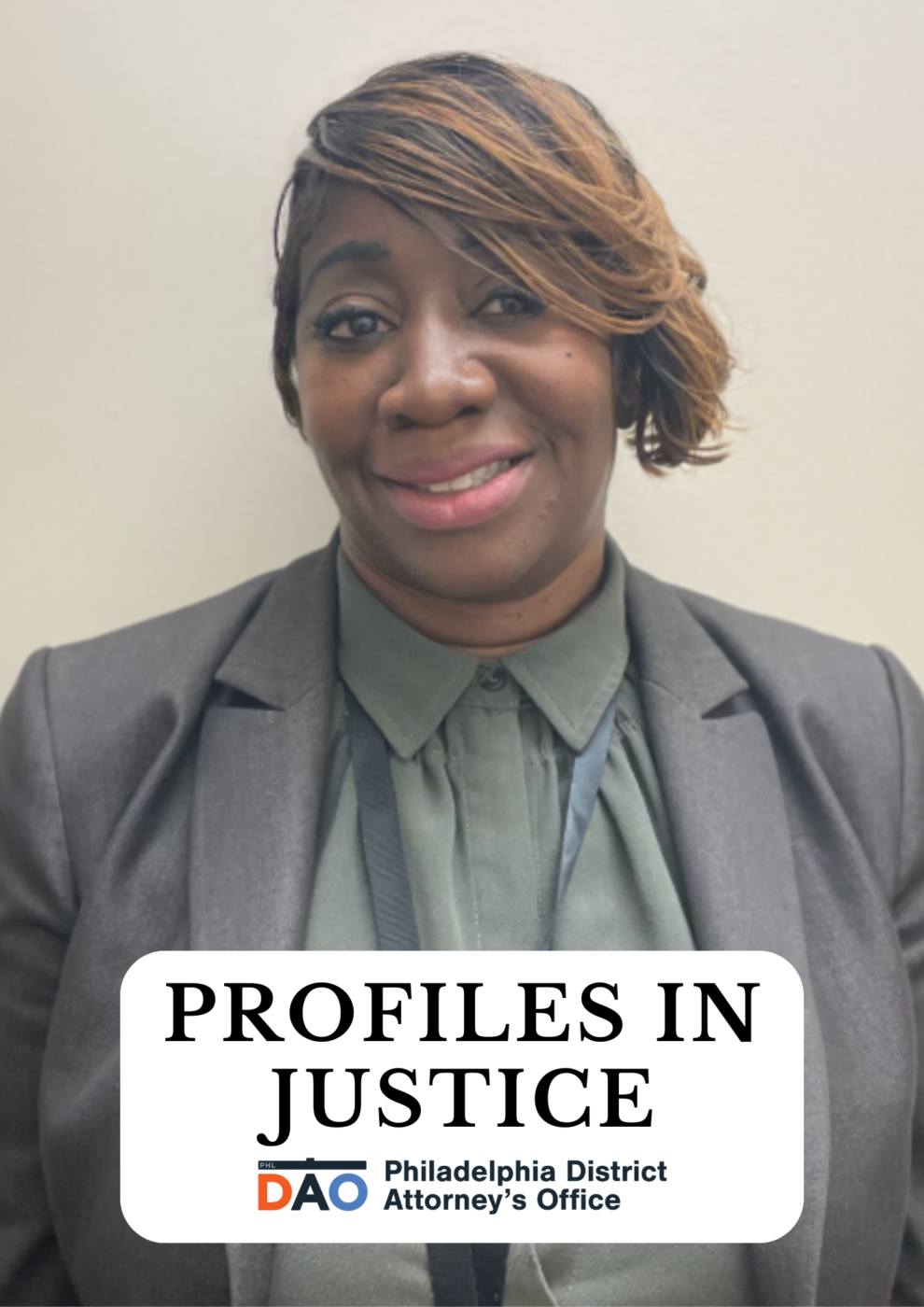
By Dustin Slaughter
From an early age, service and care defined Philadelphia Police Officer Tina Staley-Bailey’s life and career path. As a young woman attending the Community College of Philadelphia, she pursued a degree in early childhood education, driven by a genuine love for working with children. Before enrolling in college, she had already spent time as an assistant nursery school teacher, nurturing young minds and finding fulfillment in helping children grow. Education, simply put, was a calling for her. Yet during her time in college, the trajectory of her life shifted unexpectedly. She learned that the Philadelphia Police Department (PPD) offered opportunities to serve youth and strengthen communities. The idea that law enforcement could be another avenue for mentorship appealed greatly to Staley-Bailey. In April 1996, she submitted her application. By December of that year, she received the life-changing call to begin her career with the PPD.
She was first deployed to the 19th District, covering her native West Philadelphia. Growing up there had given her a familiarity with the people who called the community home. Assigned to patrol, she immersed herself in her police work while building relationships with residents. Over time, her work led to an invitation to join the district’s Narcotics Enforcement Team (NET). As a narcotics officer, she confronted the realities of narcotics crimes and their damaging effects on the community she called home. Though the assignment challenged her in new ways, she believed she made a meaningful difference in the lives of residents seeking safer streets.
During her time in narcotics enforcement, she became pregnant, prompting her to consider a different role within the PPD. Determined to create more sustainability for her growing household, she transferred to the Fifth District, serving the Roxborough, Manayunk, and Andorra areas. There, she continued patrol duties and at one point was assigned a foot beat along Ridge Avenue, a bustling business corridor. Walking the beat allowed her to practice community policing. Each day she engaged with shop owners, employees, and patrons, providing a visible presence that fostered reassurance and partnership.
“I felt as though the community really enjoyed having an officer out there every day keeping them safe and just engaging.”
The consistent, face-to-face interactions reminded her why she had entered public service in the first place. Community members valued seeing the same officer each day—someone who knew their names, understood their concerns, and shared their investment in neighborhood well-being.
Another turning point in her law enforcement career in the Fifth District came when her captain asked whether she would consider becoming a Victim Assistance Officer. Accepting the role, she became a crucial liaison between crime victims and the criminal justice system. She provided victims with copies of police reports, connected them to detectives, and guided them toward available resources such as reimbursement funds, medical assistance, counseling services, shelters, and advocacy organizations. She took particular care with elderly victims targeted by scams, recognizing how devastating financial exploitation could be. Ensuring they were not revictimized became a personal mission.
“That was a very rewarding job, and I took it very serious, especially with my elderly victims who were victims of scam, and that that was something that was very important to me, to get that message out, To make sure that these elderly victims were no longer victims of scam.”
Years into her career, another unexpected opportunity appeared, this time in the form of an email from the Philadelphia District Attorney’s Office seeking officers and detectives interested in joining its ranks. Staley-Bailey reflected carefully, consulted trusted friends and family, before deciding to apply. After interviews and conversations with detectives already assigned to the office, she was offered a position. The decision to transition to the District Attorney’s Office became one of the most meaningful choices of her career. There, she discovered what she describes as a different form of policing—one that extends beyond the street and into the courtroom.
In her current role, she works closely with crime victims. She often joins them in courtrooms, finding that her presence gives them reassurance. Beyond victim support, her responsibilities include conducting interviews, collecting DNA, providing security for the office, transporting individuals, and interacting with juveniles navigating the justice system. She emphasizes in interactions with them that their mistakes do not define them as people.
“I try to be a mother and I tell them that I’m not here to judge you. What you’ve done, this does not define you. And when you come up out of this, there are places that will hire you, and you’re bigger than this, so I feel good knowing that I’m still making an impact on juveniles.”
Outside of her professional life, family remains her greatest source of joy. Creatively, she expresses herself through abstract painting and cultivating over 60 houseplants. She also finds inspiration in museums, enjoys exploring restaurants as a self-described “foodie”, and has recently taken up cooking. Following the passing of her mother nearly a year ago, she has committed herself to preserving her mother’s culinary legacy. She strives to keep recipes, gatherings, and shared memories alive for future generations.
She also has a message for Philadelphia’s younger residents, to whom she often speaks about considering a career with the PPD: “Do it. It’s a rewarding career. I’ve had a phenomenal career. Different assignments. I’ve been blessed. I work with some wonderful officers. Have your back, and there’s room for promotion. There’s many different avenues where you can go within the police department.”